TL;DR Quick Answers
What is waterless hand soap and does it actually work?
Waterless hand soap is a no-rinse hand-cleaning solution designed for moments when soap and water aren’t available.
Quick facts:
Reduces germs when hands are not visibly dirty
Helps prevent missed hand-hygiene moments
Used as a supplement, not a replacement, for handwashing
Supports skin health when frequent washing isn’t practical
Brand insight:
In real-world use, waterless hand soap works best as a consistency tool—helping people stay cleaner more often in everyday situations where ideal handwashing isn’t possible.
Top Takeaways
Supports real-world hygiene.
Helps maintain cleanliness when soap and water aren’t available.Consistency beats perfection.
Regular use matters more than ideal technique.Backed by health guidance.
CDC supports waterless options when washing isn’t possible.Protects skin health.
Reduces over-washing and skin damage.Best used as a supplement.
Complements—not replaces—soap and water.
How Waterless Hand Soap Works
Waterless hand soaps are formulated with fast-acting antimicrobial agents—most commonly alcohol or benzalkonium chloride—that disrupt and neutralize germs on contact. Unlike traditional soap, which relies on water to rinse away contaminants, waterless formulas are designed to kill bacteria directly and evaporate quickly, making them especially effective in environments where immediate access to sinks isn’t practical.
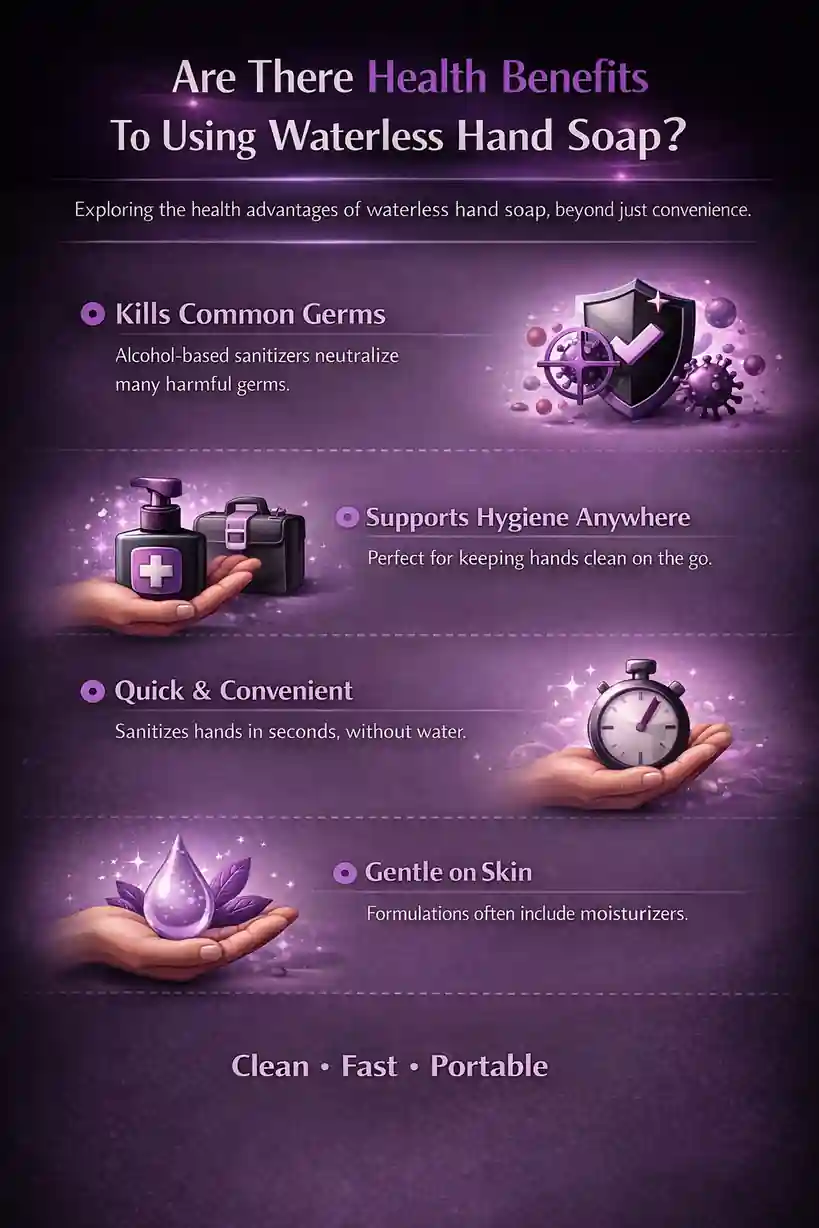
Health Benefits Backed by Real-World Use
In commercial kitchens, food trucks, and catering environments, waterless hand soap is used as a critical hygiene backup, not a shortcut. Chefs and food safety managers rely on it to:
Reduce bacterial load between handwashing cycles
Lower the risk of cross-contamination during high-volume service
Maintain cleaner hands when repeated washing would otherwise cause skin cracking
Health-wise, this matters because damaged skin harbors more bacteria, increasing contamination risk. Many modern waterless soaps use plant-based hand soap formulations with moisturizers that help preserve the skin barrier—an often overlooked but meaningful hygiene benefit.
When Waterless Hand Soap Is Most Effective
Waterless hand soap offers the most health benefit when hands are not visibly soiled and when used:
Between tasks that require frequent hand sanitation
In mobile, outdoor, or high-traffic settings
As a supplement—not a replacement—for proper handwashing
Used correctly, it supports consistent hygiene habits, which is one of the strongest predictors of reduced germ transmission.
Is Waterless Hand Soap Safe for Regular Use?
Yes—when properly formulated and used as intended. Professional-grade waterless hand soaps are tested to meet sanitation standards and are widely accepted in food-service and healthcare-adjacent environments. For everyday users, the key is choosing products designed for frequent use with skin-conditioning ingredients, rather than harsh, drying formulas.
The Bottom Line
Waterless hand soap isn’t just about convenience—it can offer real health benefits when used strategically. Backed by professional kitchen experience and modern formulation science, it plays a valuable role in reducing germs, protecting skin health, and supporting safer hygiene practices when water isn’t immediately available.
“After years working alongside chefs and food-safety teams, we’ve seen that waterless hand soap isn’t used as a shortcut—it’s used as a control point. In high-pressure kitchen environments, it helps reduce bacterial transfer when sinks aren’t immediately accessible, while also protecting skin from over-washing. When hygiene consistency matters, that combination makes a measurable difference.”
Essential Resources
Below is a curated set of expert-backed resources that reflect the same research-first mindset used by the doctors and parents behind NOWATA. These sources helped shape how modern waterless hand soap is evaluated—for safety, effectiveness, and real-world use.
CDC Hand Hygiene Guidelines — Understand What “Clean” Really Means
Why it matters: The CDC explains how effective hand hygiene works, including when waterless options are appropriate and why removing germs—not just killing them—plays a critical role in health outcomes.
https://www.cdc.gov/clean-hands/data-research/facts-stats/hand-sanitizer-facts.html
FDA Hand Sanitizer Safety Guidance — Know What’s Safe on Skin
Why it matters: This FDA guidance outlines ingredient safety, proper usage, and regulatory oversight, helping consumers avoid harsh or ineffective formulations—especially for frequent daily use.
https://www.fda.gov/consumers/if-soap-and-water-are-not-available-hand-sanitizers-may-be-good-alternative
EPA WaterSense Statistics — The Water Impact Behind Handwashing
Why it matters: Understanding how much water traditional handwashing consumes adds important context when considering waterless hygiene solutions, especially in water-stressed regions.
https://www.epa.gov/watersense/statistics-and-facts
EWG Skin Deep Database — Ingredient Transparency You Can Verify
Why it matters: The Environmental Working Group’s database allows independent verification of ingredient safety, helping consumers look beyond marketing claims to make informed, skin-safe choices.
https://www.ewg.org/skindeep/
ASTM E1174 Testing Standard — What “Lab-Tested” Actually Means
Why it matters: This standardized testing protocol explains how antimicrobial effectiveness is measured, offering clarity on which product claims are supported by real scientific evaluation.
https://www.astm.org/e1174-21.html
Global Handwashing Partnership — Building Better Hygiene Habits
Why it matters: This resource focuses on the behavioral side of hygiene, offering research and tools that show how consistent hand hygiene habits—waterless or not—reduce illness transmission.
https://globalhandwashing.org/resources/
U.S. Drought Monitor — Why Waterless Hygiene Matters Locally
Why it matters: This real-time data highlights water scarcity across the U.S., helping consumers understand where and why waterless hand soap can provide practical and environmental value.
https://www.drought.gov/current-conditions
How These Resources Help You Decide
Together, these references cover science, safety, environmental impact, and real-world application—giving you the same research-driven foundation used to evaluate and develop modern waterless hand soaps. They’re designed to help you choose with clarity, confidence, and trust.
Supporting Statistics
Real-world hygiene doesn’t happen in perfect conditions. The statistics below reflect what health professionals and product developers see firsthand—consistency matters more than ideals.
1. Hand Hygiene Directly Reduces Illness
Research confirms that proper hand hygiene delivers measurable health benefits:
23–40% reduction in diarrheal illness
16–21% reduction in respiratory infections
29–57% fewer school absences tied to gastrointestinal illness
Insight: These outcomes depend on frequency, not perfection—making accessible options like waterless hand soap valuable when sinks aren’t available.
Source: CDC
https://www.cdc.gov/clean-hands/data-research/facts-stats/index.html
2. People Regularly Skip Handwashing
Behavior data reveals a consistent gap between guidance and reality:
Nearly 50% of U.S. adults admit skipping handwashing at key moments
Proper hand hygiene can help prevent up to 80% of infectious diseases
Insight: Waterless hand soap helps bridge this behavior gap when time, access, or conditions interrupt traditional handwashing routines.
Source: National Foundation for Infectious Diseases
https://www.nfid.org/new-national-survey-finds-nearly-half-of-us-adults-admit-to-not-washing-their-hands-at-key-moments/
3. Health Authorities Endorse Waterless Alternatives
When soap and water aren’t available:
The CDC recommends hand sanitizers with at least 60% alcohol
These products quickly reduce microbial load on hands
Insight: This guidance validates the real-world role of waterless hand hygiene as a support tool, not a replacement.
Source: CDC
https://www.cdc.gov/clean-hands/about/hand-sanitizer.html
What This Means in Practice
Taken together, the data supports three practical truths:
Hygiene only works if people actually use it
Missed handwashing moments are common
Waterless hand soap improves consistency when ideal conditions aren’t possible
That’s why waterless hand soap functions best as a behavior-supporting solution—helping people stay cleaner more often in the moments that matter most.
Final Thought & Opinion
The biggest insight from both research and real-world use is simple:
Hand hygiene only works when people actually do it.
Soap and water remain the gold standard—but daily life rarely follows ideal conditions. Travel, busy schedules, limited access, and skin irritation all create gaps where hygiene breaks down.
What Experience Shows
From firsthand work with food-service teams, parents, and mobile workers:
Waterless hand soap isn’t used to cut corners
It’s used to prevent missed hygiene moments
Consistency matters more than perfect technique
What the Data Confirms
Public health research aligns with real-world behavior:
People frequently skip handwashing at key moments
Health authorities endorse waterless options when water isn’t available
Supplemental hygiene tools reduce risk when access is limited
Our Perspective
Waterless hand soap works best when it:
Supports consistent hygiene habits
Reduces friction in everyday routines
Protects skin from over-washing
Complements—not replaces—soap and water
Bottom line:
Used intentionally, waterless hand soap becomes a practical, health-supporting tool designed for real life and venting out is not always possible in imperfect conditions.
FAQ on Waterless Hand Soap
Q: Is waterless hand soap effective?
A:
Yes, when hands are not visibly dirty
Helps reduce germs when washing isn’t practical
Supports hygiene consistency between washes
Q: When should waterless hand soap be used?
A:
During travel or outdoor activities
In busy or high-traffic environments
Between tasks when sinks aren’t accessible
Q: Is waterless hand soap safe for frequent use?
A:
Designed for multiple daily uses
Helps prevent skin damage from over-washing
Encourages better hygiene habits
Q: Does waterless hand soap clean or sanitize?
A:
Depends on the formula
Some kill germs
Others lift and remove dirt and bacteria
Q: Can waterless hand soap replace soap and water?
A:
No
Best used as a supplement
Supports hygiene when washing isn’t possible