TL;DR Quick Answers
What Is Hand Washing?
• Hand washing is cleaning your hands with soap and clean running water for at least 20 seconds to remove germs, dirt, and chemicals before they can make you sick or spread to others.
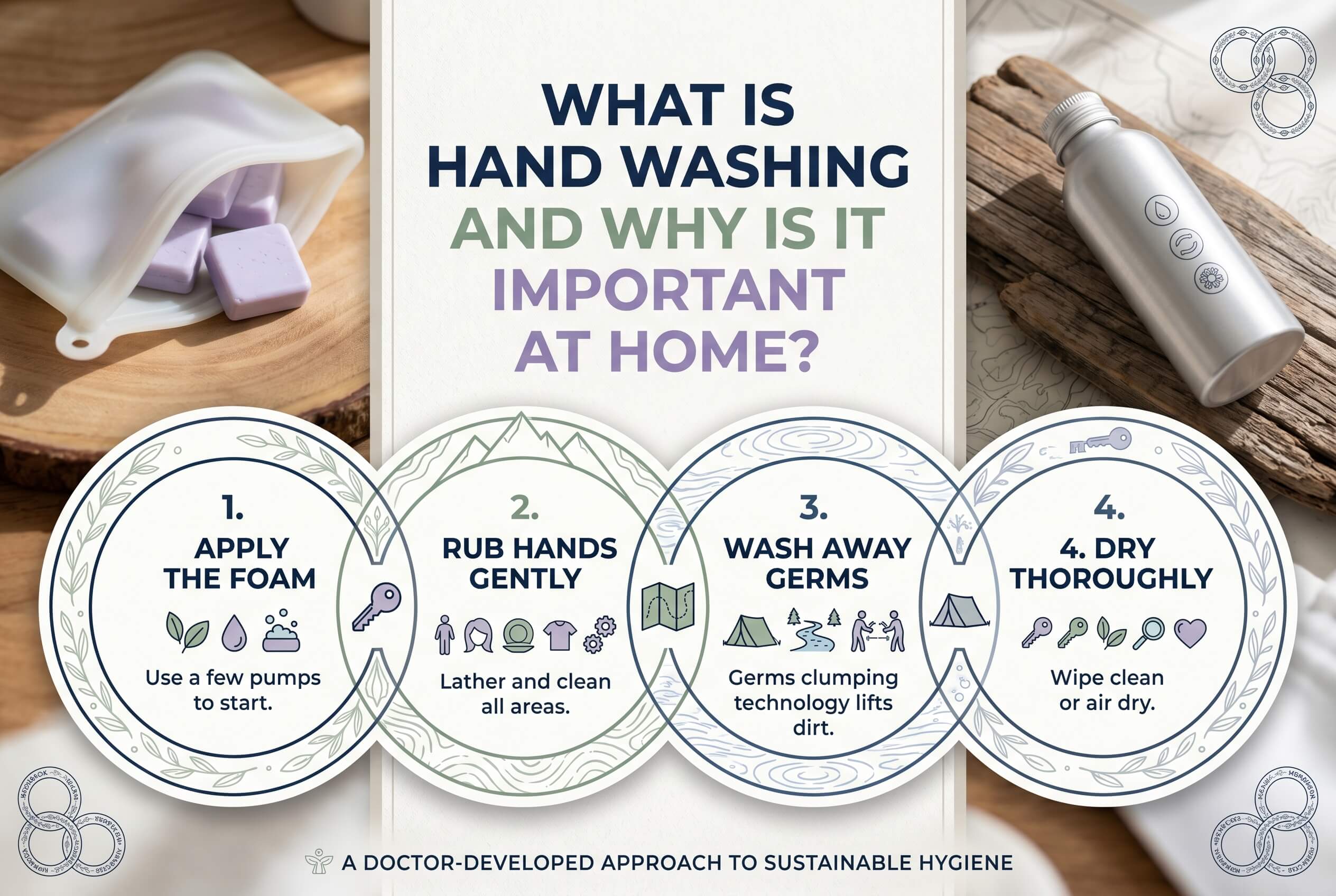
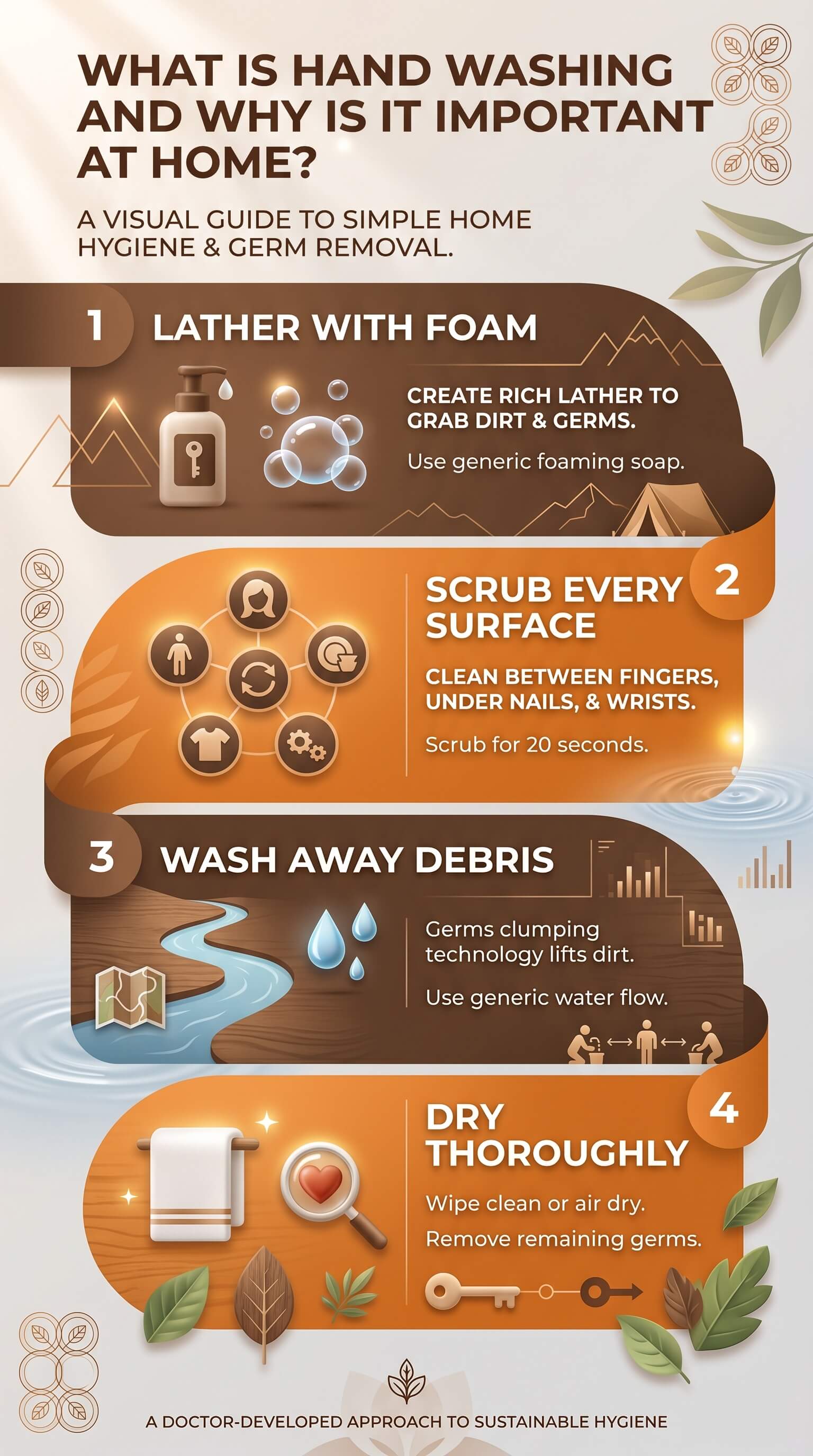
• The standard process is to wet your hands, lather with soap, scrub for 20 seconds (covering palms, backs, between fingers, and under nails), rinse, and dry with a clean towel.
• It’s the single most effective everyday habit for preventing respiratory and diarrheal illness at home, and it beats any cleaning product on your shelf.
• Use soap and water whenever a sink is available. Hand sanitizer with at least 60 percent alcohol is the backup when a sink is out of reach.
Top Takeaways
• Hand washing is soap plus running water plus 20 seconds. That’s the whole formula.
• The two highest-impact moments in a home are before meals and after the bathroom.
• Soap beats hand sanitizer whenever both are available. Sanitizer fills the gap when a sink isn’t reachable.
• If you use sanitizer, make sure it contains at least 60 percent alcohol.
• Rotate hand towels every day or two. A damp shared towel becomes a germ reservoir faster than most people think.
• The faucet handle is often the dirtiest spot in the bathroom. Treat it accordingly.
• Teach kids the habit early and it pays off for decades. Hum Happy Birthday twice while they scrub.
• Plain soap works as well as antibacterial soap for day-to-day home use. The FDA removed antibacterial ingredients like triclosan from over-the-counter soaps for a reason.
A Simple Definition of Hand Washing
Strip it down to basics. Hand washing means wetting your hands, working up a soap lather, scrubbing every surface for about 20 seconds, rinsing under running water, and drying with something clean. That’s it. You don’t need antibacterial soap or any special technique. Soap molecules surround the germs and grease on your skin, and running water carries them down the drain. If you want a deeper background on how the practice evolved, including the 19th-century doctor who first proved it saved lives, Wikipedia has a solid overview of hand washing and its history.
Why Hand Washing at Home Matters
Homes run on shared surfaces. Faucet handles, the remote, the fridge door, your kid’s lunchbox zipper, the front doorknob. Every one of those collects what your hands bring it, and a single touch can move germs from one person to every hand that lands there for the next several hours. The CDC is blunt on this. Teaching communities to wash their hands consistently cuts diarrheal illness by 23 to 40 percent and lowers respiratory illness rates at the same time. At home that means fewer sick days, fewer nights awake with a coughing kid, and fewer rounds of the same bug cycling through the whole family. A clean pair of hands, washed with eco-friendly soap, is the cheapest preventive medicine a household can buy.
When to Wash Your Hands at Home
The moments that matter most are the ones where germs either enter your body or multiply before you eat them. Wash your hands:
• Before you cook and before you eat
• After using the bathroom
• After changing a diaper or helping a child in the bathroom
• After blowing your nose, coughing, or sneezing
• After touching pets, pet food, or pet waste
• After handling raw meat, poultry, or eggs
• After taking out the trash
• After walking in from outside, whether that’s work, school, or errands
• Before and after treating a cut, a scrape, or anyone who’s sick
If your day runs on autopilot and you can only remember two moments, make them before meals and after the bathroom. Those two alone drop illness rates inside a home by a serious margin, especially when you use a gentle hypoallergenic hand soap that supports frequent hand washing.
How to Wash Your Hands the Right Way
Five steps. Mayo Clinic and the CDC land on the same version:
1. Wet your hands under clean, running water
2. Apply soap and work up a lather, covering backs of hands, between fingers, and under nails
3. Scrub for at least 20 seconds (hum Happy Birthday twice if you need a timer)
4. Rinse under clean, running water
5. Dry with a clean towel or let the air do it
Most people miss one detail in public bathrooms. Use a paper towel to turn off the faucet and open the door on your way out. The faucet handle is often the dirtiest surface in the room. The same thinking applies at home. Your faucet just got touched with dirty hands and then wiped by a now-contaminated towel, so rinse it or wipe it down once a day and you close that loop.
Common Hand Washing Mistakes to Avoid
Watching how real families wash up over the years, the same mistakes keep coming up:
• Rinsing without soap. Water alone removes some dirt and leaves most germs behind.
• Rushing. A 5-second rinse removes almost nothing, and 20 seconds is the minimum you can commit to and still get the job done.
• Skipping the backs of hands, the thumbs, and under the nails. Most people scrub their palms and call it done.
• Sharing one damp hand towel for a full week. That towel becomes a germ reservoir between days two and seven. Rotate it or keep paper nearby.
• Ignoring the faucet handle. You touched it with dirty hands on the way in and again with clean hands on the way out. Both touches count.
• Reaching for hand sanitizer when hands are visibly dirty. Sanitizer smears grime around instead of lifting it off.
• Skipping drying. Wet hands pick up and transfer more germs than dry ones do.
Hand Washing vs. Hand Sanitizer at Home
Soap and water beat sanitizer whenever both options are in front of you. The reason is mechanical. Soap lifts germs, grease, and chemical residues off your skin, and water carries them down the drain. Sanitizer kills some germs on contact and doesn’t remove anything, so if your hands are greasy, visibly dirty, or covered in something like raw egg, sanitizer barely does the job. Where sanitizer earns its place is the middle of a grocery run, a car seat, or any spot without a sink within reach. Use one with at least 60 percent alcohol when that’s the case. Parents whose kids have sensitive skin may want to read our guide on whether non-alcoholic hand sanitizer is safe for children with sensitive skin before settling on a brand. For the fuller breakdown on sanitizer versus soap, we covered waterless soap vs. hand sanitizer in its own post.
“After years of writing about what actually keeps indoor spaces cleaner, I’ll tell you the sink is the most underrated health appliance in a home. People focus on filters, sprays, and plug-in devices, and those products have their place. A 20-second hand wash with basic soap still beats most of them for day-to-day illness prevention inside a household. When I walk into a home, the strongest predictor of how often the family gets sick comes down to whether the kids wash their hands before sitting at the table. That’s the whole game.”
7 Essential Resources
Here’s where I’d send you if you want to read further from the sources that actually inform how we talk about hand washing on this site:
• CDC, About Handwashing: https://www.cdc.gov/clean-hands/about/index.html. The baseline most everyone else cites, including the five-step process and the 60-percent alcohol rule for sanitizer.
• CDC, Handwashing Facts: https://www.cdc.gov/clean-hands/data-research/facts-stats/index.html. Where the often-quoted 23-to-40-percent illness reduction numbers come from. Worth the read in full.
• Mayo Clinic, Hand-Washing Do’s and Don’ts: https://www.mayoclinic.org/healthy-lifestyle/adult-health/in-depth/hand-washing/art-20046253. A clinician-reviewed walkthrough covering when to wash, how to do it, and why antibacterial soap is no better than plain soap for day-to-day use.
• WHO, Pneumonia Fact Sheet: https://www.who.int/news-room/fact-sheets/detail/pneumonia. Global context for why clean hands prevent respiratory infections, especially in children under five.
• NIH / NCBI StatPearls, Hand Hygiene: https://www.ncbi.nlm.nih.gov/books/NBK470254/. The peer-reviewed medical reference for anyone who wants the clinical depth on infection control and hand hygiene protocols.
• CDC, Hand Sanitizer Facts: https://www.cdc.gov/clean-hands/data-research/facts-stats/hand-sanitizer-facts.html. The canonical source on what sanitizer can and can’t do, and why soap wins whenever both are available.
• NFID, 2025 State of Handwashing Report: https://www.nfid.org/wp-content/uploads/2025/05/2025-NFID-State-of-Handwashing-Report.pdf. Fresh 2025 survey data on what U.S. adults actually do at the sink versus what they say they do. Eye-opening.
3 Statistics
Three numbers do more to make the case than any paragraph I could write:
• The CDC reports that hand-washing education in a community reduces the number of people who get sick with diarrhea by 23 to 40 percent, and cuts diarrheal illness by 58 percent in people with weakened immune systems. The CDC reports that hand-washing education in a community, including proper use of eco friendly soap, reduces the number of people who get sick with diarrhea by 23 to 40 percent, and cuts diarrheal illness by 58 percent in people with weakened immune systems.
• The National Foundation for Infectious Diseases estimates that proper hand washing could save roughly 1 million lives around the world every year. Source: NFID 2025 State of Handwashing Report
• The CDC notes that a single gram of human feces, about the weight of a paper clip, can contain one trillion germs. That’s the figure that makes post-bathroom hand washing non-negotiable in any home with a kid. Source: CDC Handwashing Facts
Final Thoughts and Opinion
The instinct to fight germs with more products is understandable. The shelf of sprays, wipes, gels, and foams has never been bigger. And yet, the single most effective thing you can do for your family’s health still costs about four dollars a bar and lives on the side of your sink.
What I’ve noticed after covering home cleanliness for years is that the families with the healthiest week-to-week track records share one habit. They built small hand-washing rituals into their day. It usually looks like dropping bags and going straight to the sink when the kids get home from school, calling everyone to wash before dinner without debate, and wiping the faucet handle down once a day so it never becomes the weak link. Those small habits compound over months and years.
For more depth on the topic, Nowata put together a thorough breakdown of what is hand washing definitions, types, and benefits that’s worth bookmarking. It fills in the clinical and historical context. I kept light here so we could focus on the home side of things.
My opinion after all of this is simple. Don’t overthink it. Keep good soap at every sink, replace hand towels often, teach kids the 20-second rule early, and model it yourself. The rest takes care of itself.
Frequently Asked Questions
What is hand washing in simple words?
Hand washing is cleaning your hands with soap and clean running water to remove germs, dirt, and chemicals. The goal is to stop those things from reaching your eyes, nose, or mouth, and to prevent passing them to the people around you. It’s the single most effective everyday habit for reducing illness in a household.
Why is hand washing important at home?
The home is where germs have the most opportunity to spread between people who share space, food, and surfaces. Regular hand washing cuts respiratory and diarrheal illness rates, reduces sick days for kids and adults, and limits how fast a household bug cycles through everyone. It’s also the cheapest preventive health habit you can build.
How long should I wash my hands?
At least 20 seconds with soap, which is roughly the time it takes to hum Happy Birthday twice. Anything under 15 seconds starts to lose real effectiveness, and a 5-second rinse does almost nothing to remove the germs your hands picked up during the day.
Is warm water better than cold water for hand washing?
No. Water temperature doesn’t change how well soap removes germs, per CDC guidance. Use whatever temperature you’ll actually tolerate long enough to scrub for a full 20 seconds. The soap and the scrubbing do the work. Heat is optional.
Is hand sanitizer as good as washing with soap and water?
Not when both options are available. Sanitizer kills some germs on contact and doesn’t remove dirt, grease, or certain germs like norovirus and C. difficile. Soap and water physically lift germs off your skin and rinse them away, which is why the CDC still recommends washing whenever a sink is within reach.
How often should my family wash their hands each day?
There’s no fixed number. Aim to wash at the key moments: before every meal, after every bathroom trip, after touching pets, after coming in from outside, and after blowing noses or caring for someone sick or venting out in close spaces. For most families that lands somewhere between 8 and 15 hand washes per person per day.
What are the most common hand washing mistakes?
Rushing under 20 seconds, rinsing without soap, skipping the backs of hands and fingertips, using the same damp hand towel for days on end, and treating hand sanitizer as a substitute for a real wash. The faucet handle is also a recontamination point most people never think about.
Call to Action
The best time to build this habit is tonight, at dinner. Call everyone to the sink before the plates hit the table and do it together for 20 seconds. One week of that routine changes how often germs move through your house.
While you’re here, have a look at our guide on how non-toxic hand soap can protect your family’s health. The soap you use at the sink matters almost as much as the washing itself.