TL;DR Quick Answers
norovirus disney world
Norovirus at Disney World is the fast-spreading stomach virus behind sudden vomiting and diarrhea, usually picked up from a contaminated surface, ride handrail, or shared meal rather than anything Disney did wrong.
Symptoms hit within 12 to 48 hours and usually clear in 1 to 3 days.
It spreads through contact, not air, so soap and water beats sanitizer.
You stay contagious for up to 2 weeks after symptoms stop.
Top Takeaways
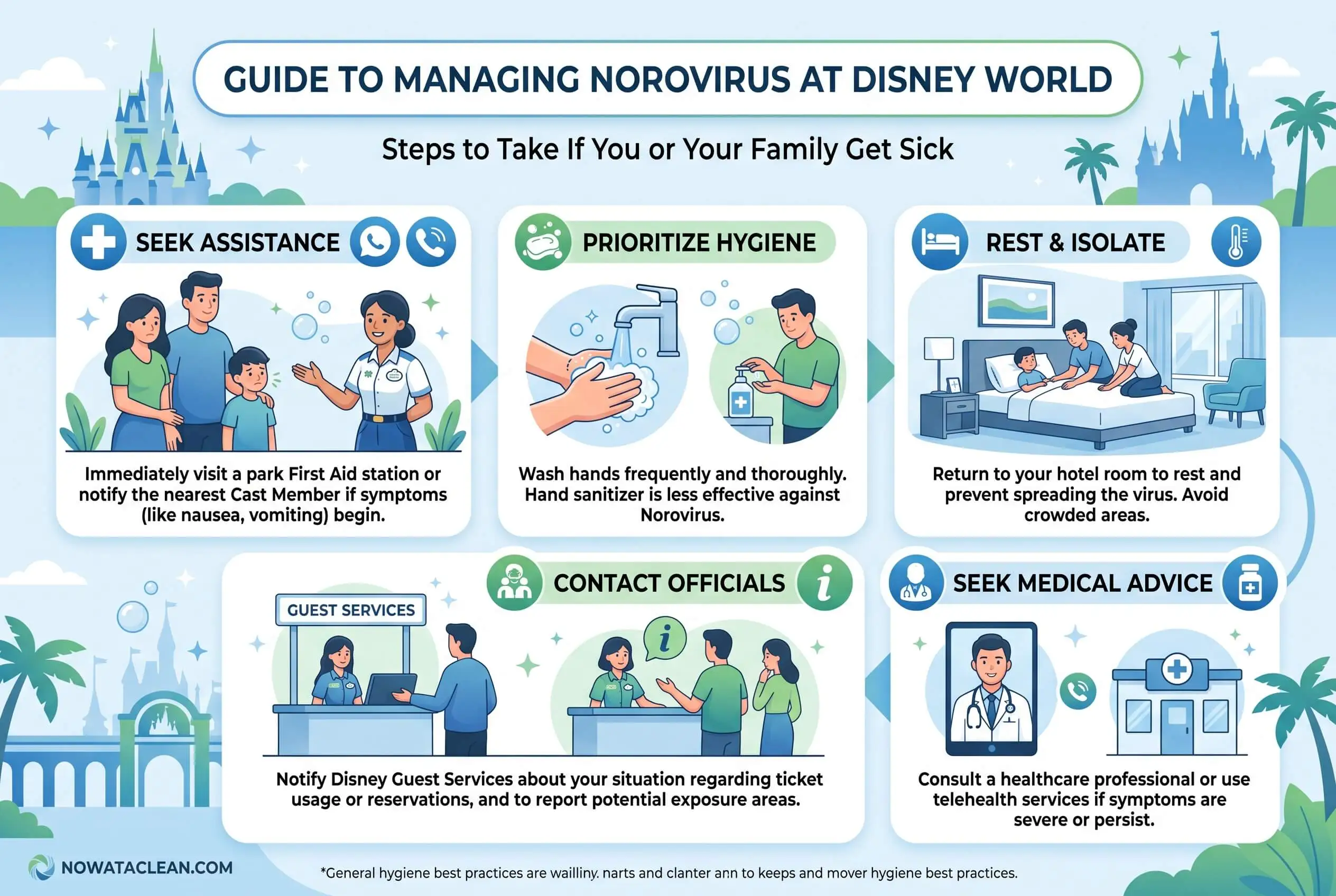
Norovirus spreads through contact, not through the air. That makes soap and water your single strongest defense, not hand sanitizer alone.
Read more on soap and how it strips away the virus's outer layer on contact, which is exactly why it outperforms sanitizer here.
The nearest First Aid station, not your resort room, gets you help fastest while you're still in the park.
Symptoms usually clear in one to three days, but you can stay contagious for up to two weeks after you feel fine.
A sick day at Disney World doesn't have to cost you a ticket. Unused dates can typically move to a future visit.
What's Actually Going On
The sudden stomach bug ripping through your group is almost always norovirus rather than food poisoning or the flu. It's highly contagious, and it spreads through contact: an infected person, contaminated food, or a surface someone touched minutes before you did. At Disney World, that means handrails, ride restraints, condiment stations, and splash pad surfaces are all fair game. This isn't a sign Disney did anything wrong. It's a numbers problem, not a Disney problem: tens of thousands of hands touch the same surfaces in a single day.
If You or Your Kid Gets Sick Right Now
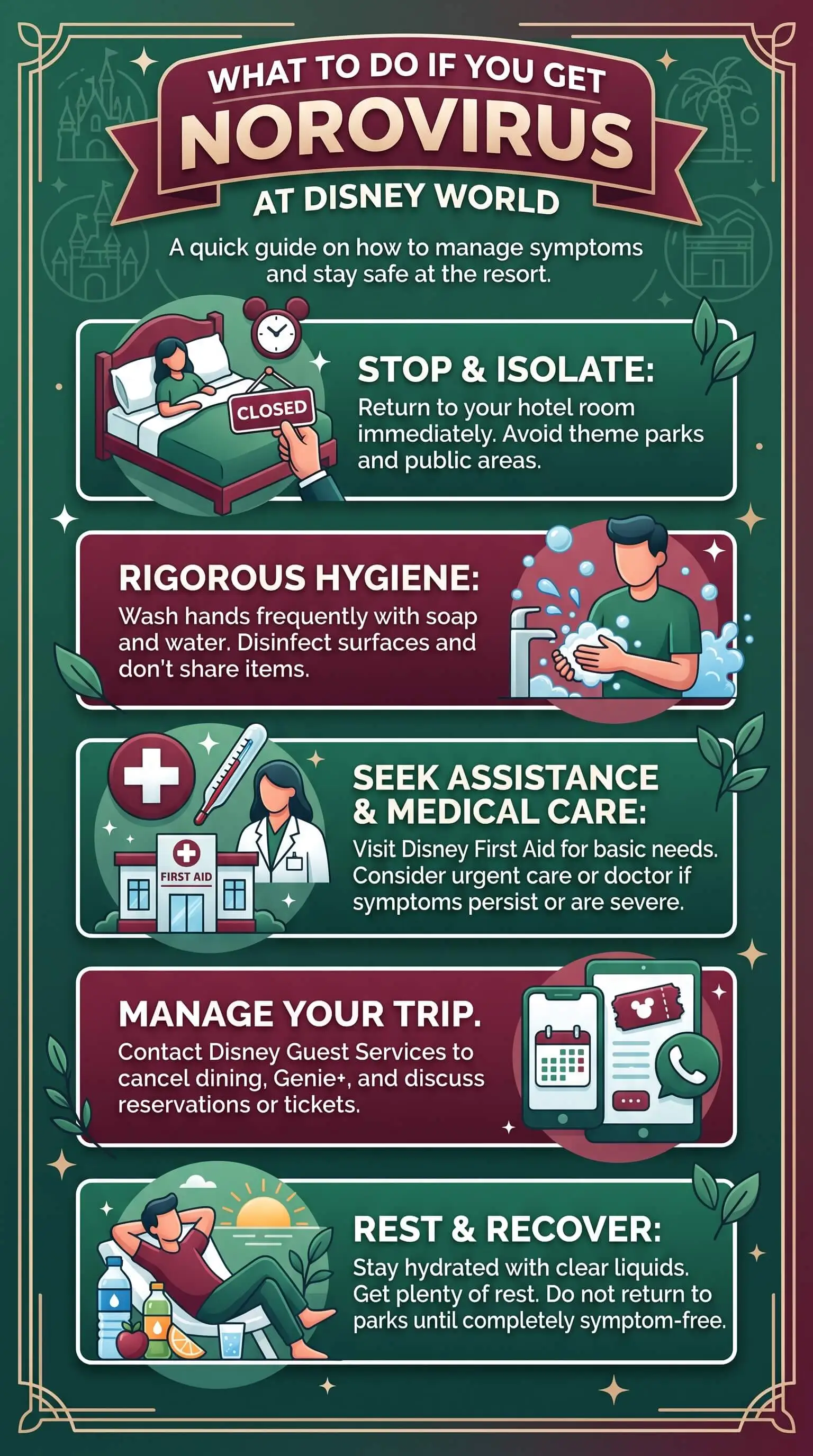
Get to the nearest First Aid station immediately. Every park has one, staffed by a registered nurse who can help you decide between over-the-counter relief, a place to lie down, or a ride back to your resort.
Separate the sick person from the rest of your group right away. Norovirus moves fast in tight spaces, and one sick kid on a crowded ride vehicle can turn into three sick kids by dinner.
Skip the food and focus on small sips of water or an electrolyte drink. Most healthy people are back on their feet within a day or two, and pushing food too soon usually backfires.
Adjusting the Rest of Your Day (or Trip)
If someone in your group is clearly done for the day, don't try to push through the Lightning Lane picks or the dining reservations you already locked in. Cancel or move those reservations inside the My Disney Experience app instead of no-showing. Several restaurants charge a per-person fee for an unclaimed table. Theme park tickets themselves are non-refundable, but Disney will let you shift an unused ticket to a different date, so one lost day doesn't have to mean one lost ticket. Keep kids' hands clean throughout the day, especially before eating or touching their faces, to help reduce the chance of the illness spreading through the rest of your group. When symptoms turn severe, meaning fluids won't stay down, there's blood in the stool, or a fever won't break, skip the wait-and-see approach entirely. Head straight to Centra Care Urgent Care or the nearest hospital instead of a First Aid station.
Is It Really Norovirus?
Norovirus, food poisoning, and Florida heat exhaustion can look identical in the first hour. The details tell you which one you're actually dealing with. Food poisoning usually shows up within a few hours of one specific meal, and it typically only hits the people who ate that dish. Heat exhaustion brings heavy sweating, dizziness, and a pounding headache rather than sudden vomiting. Norovirus is different. It moves through an entire group over a day or two, hits without warning, and pairs vomiting with diarrhea rather than just one or the other. If everyone who rode the same attraction together starts feeling sick by evening, norovirus is the far more likely explanation.
“Theme parks have every ingredient norovirus needs: shared surfaces, shared bathrooms, and thousands of hands touching the same handrail in a single afternoon,” says Maria Delgado, a Central Florida infection-prevention consultant with a decade managing environmental services for a regional hospital system. “The one thing people underestimate is that hand sanitizer barely touches this virus. Actual soap and water, for a full 20 seconds, is still the most effective thing anyone can do in a park bathroom.”
7 Essential Resources
CDC: About Norovirus. Symptom timeline, how it spreads, and how long it typically lasts. cdc.gov/norovirus/about
CDC: Norovirus Outbreaks. Common outbreak settings, and why crowded, shared spaces carry higher risk. cdc.gov/norovirus/outbreak-basics
Mayo Clinic: Norovirus Infection, Symptoms & Causes. A clinical overview of symptoms and the contagious window. mayoclinic.org/norovirus-symptoms
Mayo Clinic: Norovirus Infection, Diagnosis & Treatment. What a doctor can and can't actually do for it. mayoclinic.org/norovirus-treatment
Walt Disney World: First Aid. Official locations and hours for every park's First Aid station. disneyworld.disney.go.com/first-aid
Walt Disney World: AdventHealth Guest Health Care Services. Disney's official on-site medical partner, including urgent care and telehealth. disneyworld.disney.go.com/adventhealth
Walt Disney World: Ticket Cancel & Change FAQ. Official policy on moving an unused ticket to a new date. disneyworld.disney.go.com/cancel-change-ticket
These essential resources explain norovirus symptoms, transmission, treatment, Disney World medical services, and ticket policies, while also supporting practical hygiene steps such as washing with SLS-free soap to help keep hands clean during your trip.
3 Statistics
Norovirus causes an estimated 21 million illnesses in the United States every year, according to CDC's norovirus outbreak management guidelines.
It's responsible for roughly 58% of foodborne illness cases nationwide, more than any other single cause, per CDC norovirus facts and statistics.
Between August 2025 and June 2026, CDC's NoroSTAT surveillance network logged 1,287 norovirus outbreaks across participating states. This isn't a rare event tied to any one location.
Final Thoughts and Opinion
Our honest opinion: norovirus at Disney World doesn't deserve panic, and it doesn't deserve dismissal either. It sits right in the middle. The families who handle it best don't reach for every sanitizer bottle in the gift shop. They wash with actual soap and water, pull the sick person away from the group fast, and give themselves permission to rest instead of forcing a park day nobody will remember fondly anyway. A rough 24 hours doesn't have to define a week-long vacation.
Frequently Asked Questions
Is it norovirus or food poisoning?
Food poisoning usually hits within hours of one specific meal, and it only affects the people who ate it. Norovirus spreads through an entire group over a day or two, and it shows up as both vomiting and diarrhea, not just one or the other.
How long does norovirus last?
Most healthy people recover in one to three days. You can still spread the virus for up to two weeks after your symptoms stop, so keep washing your hands carefully even once you feel fine, and avoid relying on cleaning advice about solvents and solvency when proper handwashing with soap and water is what matters most for norovirus.
Can you get a refund or reschedule if you get sick at Disney World?
Theme park tickets are non-refundable, but Disney generally lets you move an unused ticket to a different date. Cancel dining reservations through the My Disney Experience app to avoid a no-show fee.
Does hand sanitizer protect against norovirus at the parks?
Only partly. Alcohol-based sanitizer doesn't reliably kill norovirus, so handwashing with soap and water is the stronger choice any time you have access to a sink.
When should you see a doctor instead of riding it out?
If you can't keep fluids down, notice blood in vomit or stool, or run a fever that won't break, skip the wait-and-see approach. Head to Centra Care Urgent Care or the nearest hospital instead.
CTA
Bookmark this page before you head into the parks, and send it to everyone in your group so there's a plan the moment symptoms show up. Pack Waterless hand soap as a backup for times when a sink is not immediately available, but use regular soap and water whenever possible. A little preparation now beats a lot of panic later.