Here's what nobody tells you about moving: you pay to haul every box, even the ones packed with stuff you'll toss the week after you unpack. We've cleared enough Long Island homes before move day to read the pattern from the driveway. The garage nobody parks in. The “someday” treadmill that turned into a coat rack. And those lamps that quit two moves ago but somehow keep getting boxed up anyway. The people who stay calm on move day all do the same thing first. They get rid of the junk before a single roll of tape comes out, which is why scheduling junk removal long island NY before packing can make the whole move feel lighter from the start.
TL;DR Quick Answers
junk removal long island NY
Junk removal on Long Island is a full-service haul-away where a local crew loads, removes, and disposes of unwanted items from homes and businesses, typically priced by how much truck space the items fill. Eco-conscious crews sort what they take first, so usable pieces go to donation or recycling instead of straight to a landfill.
What it usually covers:
Bulky items most towns won't take at the curb: furniture, mattresses, and appliances
Garage, basement, attic, and full estate cleanouts
Same-day or next-day pickup across Nassau and Suffolk counties
Volume-based pricing with a free, no-pressure estimate up front
Donation and recycling handled for you, not just a run to the dump
In most cases, you point, the crew handles the heavy lifting, and your space is clear in one trip.
Top Takeaways
Clearing junk before you pack cuts your moving bill, your hours, and your stress.
Bulky furniture and appliances take the longest to get rid of, so deal with them first.
Most Long Island towns won't take big items at the curb, so plan disposal ahead of packing week.
Booking junk removal on Long Island before you pack keeps the move day clear and gets it all gone in one trip.
Donate or recycle whatever's still usable, and save the landfill for last.
Why Decluttering Before You Pack Saves Money on Long Island
The math is hard to argue with. Movers bill by space and weight, and a Long Island move in peak season already costs plenty. Every box of stuff you don't actually want is money spent relocating trash you'll throw out anyway. Clear it out first with a local junk removal services company and the whole job shrinks. Fewer boxes, a faster load, a lot less to deal with on the other end. The less you move, the less you pay, and the sooner you're done living out of cardboard.
What Junk Should Go First? A Room-by-Room Priority Order
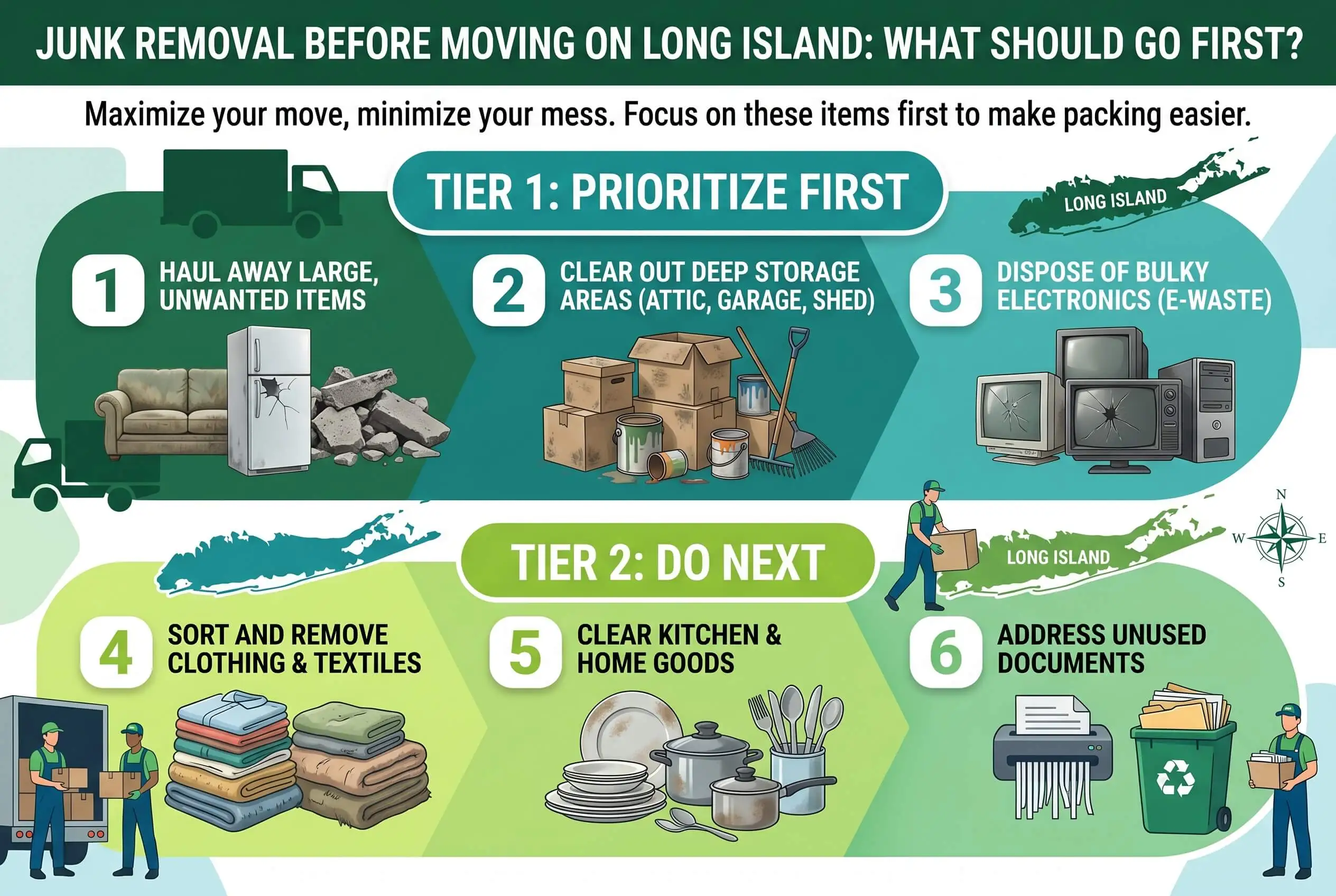
Start big and cheap, then work your way down. Here's the order we'd tackle it in:
Bulky furniture and appliances you're not taking. Sagging couches, old mattresses, the second fridge humming away in the garage. These hog the most truck space and take the longest to get rid of, so they go first.
The garage and shed. Broken tools, half-cans of paint, bald tires, the mower that hasn't started since 2022. A lot of it can't ride in the regular trash, so give yourself lead time.
The basement and attic. Those boxes you haven't opened since you moved in? Easy call. If you forgot you owned it, you won't miss it.
Bedrooms and closets. Duplicate furniture, worn-out pieces, and clothes you can donate. Bag the donations as you go so they're ready to hand off.
The kitchen. Chipped plates, the third spatula, expired cans hiding at the back of the pantry. Recycle what you can and toss the rest.
What Long Island Towns Won't Take at the Curb
This is where a lot of moves go sideways. You can't just drag a couch to the curb and hope it disappears by morning. Most Long Island towns cap how many large items you can put out and only grab them on set days. Brookhaven, for one, allows up to four bulk items on specific collection days, and the rules shift town to town across Nassau and Suffolk. Paint, tires, electronics, and anything with refrigerant usually need their own handling on top of that.
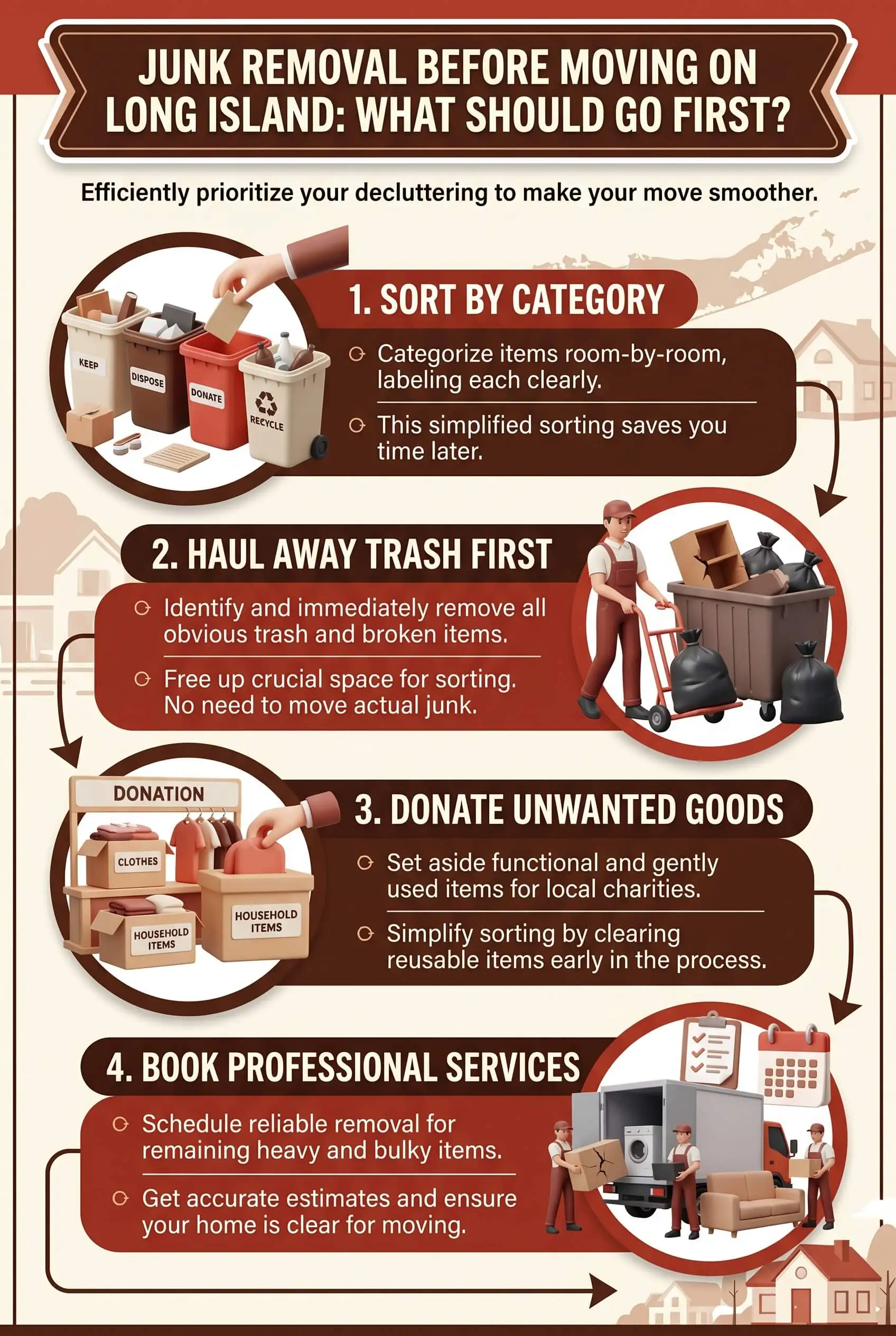
That leaves you four real options: book your town's bulk pickup, haul it to a local recycling facility yourself, schedule a donation pickup for whatever's still usable, or call a full-service crew that takes it all in one trip. Whichever you pick, set it up before packing week, not in the middle of it.
When Should You Book Junk Removal Before a Move?
Timing trips up more people than anything else. Peak moving season on Long Island runs late spring through September, which is exactly when crews, donation trucks, and movers fill their calendars. Aim to start clearing two to four weeks out. Lock in your haul-away or donation pickup early, then pack the keepers room by room.
And handle each thing once. As you decide what stays, box it right then, so you're not picking up the same lamp three times. Clear first, book second, pack third. That order is the whole game.
“The myth I hear most is that you pack first and deal with the junk later. It's backwards. On Long Island, the bulky stuff is the hard part, and the curb won't bail you out. Clear the big, low-value items first and the rest of the move gets easy. I've never watched anyone regret getting rid of too much before a move. I've watched plenty of people regret hauling a basement they never even unpacked.”
Essential Resources
A few trusted sources for figuring out what to reuse, what your town takes, and where to send the rest:
EPA: Reducing and Reusing Basics lays out practical ways to keep usable stuff out of the landfill while you downsize.
NYSDEC: Reduce, Reuse, Recycle and Compost is New York State's guidance on cutting household waste the right way.
Town of Brookhaven: Bulk Items shows real local bulk-pickup limits and collection days you can check yours against.
Town of Islip: Multi-Purpose Recycling Facility offers free resident drop-off for recyclables, electronics, and hazardous materials.
EPA: Electronics Donation and Recycling walks through what to do with the old TVs and computers you're not bringing along.
Habitat for Humanity ReStore: Donate Goods takes furniture and appliance donations, with pickup for big items at many stores.
The Salvation Army: Schedule a Donation Pickup runs free pickup for gently used furniture and household goods that still have life in them.
Supporting Statistics
A few figures that back up the case for clearing out first:
About 80% of old furniture ends up buried. Of the 12.1 million tons of furniture and furnishings Americans threw out in 2018, roughly 80% went straight to landfills, per the U.S. EPA. That old couch does a lot more good than dumped.
Roughly 1 in 9 Americans moved last year. In 2024, about 8.9% of people moved within their state and another 2.1% crossed state lines, according to the U.S. Census Bureau. You're in good company facing a pre-move cleanout.
Half of all U.S. trash gets landfilled. Around 50% of municipal solid waste, about 146 million tons in 2018, went to landfills, the U.S. EPA reports. Sorting for donation and recycling first is the easiest way to shrink your slice of that.
Final Thoughts
The most common mistake we see is simple: people leave the big stuff for the final week. By then the movers are booked, the donation trucks are full, and you're paying to relocate a couch you never liked. The fix isn't exciting, but it works every time. Clear first, pack second, especially for items like old paints, solvents, and solvency-related household materials that need proper disposal before moving day.
This has nothing to do with chasing a minimalism trend. Clearing out first comes down to money and sanity. You stop paying to move things you'll throw out anyway, and you don't start fresh in a new place buried under the same clutter you swore you'd leave behind. If you change one habit on this move, make it this one. Deal with the junk before you touch the tape. Your wallet, your back, and your move-day self will thank you for it.
Frequently Asked Questions
What should I get rid of first before moving?
Start with the bulky furniture and appliances you're not taking, then broken or duplicate items, then anything sitting forgotten in the basement, attic, or garage. Those are the slowest to get rid of and the priciest to move.
Can I put furniture and appliances at the curb on Long Island?
Usually not without rules. Most Long Island towns limit how many bulk items you can set out and only collect them on certain days, and things like refrigerators, tires, paint, and ventilation-related materials often need special handling. Check your town's bulk-pickup guidelines, or book a junk removal pickup and skip the guesswork.
How far in advance should I book junk removal before a move?
Two to four weeks is safe, and sooner during peak season from late spring through September, when crews and donation trucks fill up fast.
What's the difference between donating, recycling, and junk removal?
Donating gives usable items a second life through a charity. Recycling breaks down materials like electronics and metal. Junk removal takes it all at once, then sorts it for donation, recycling, or disposal so you don't have to.
How much does junk removal cost on Long Island?
It depends on how much you've got and what it is, since most companies charge by volume. Reputable local crews give free, no-pressure estimates, so it's worth getting a quote before move day.
Ready to Move Clutter-Free?
Give yourself an easier move. Decide what goes first, line up a donation run or a single haul-away with a junk removal service, and pack only what you actually want in the new place. A little planning now turns a moving day from chaos into a clean finish. Get a free estimate, clear out the junk, and start fresh with nothing extra weighing you down.