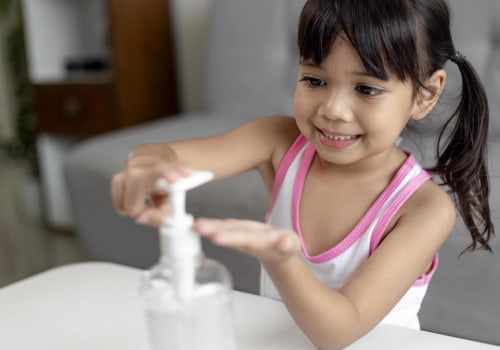
That split matters more when you have diabetes. Bacteria find their way into cracked skin, and diabetic skin can be slow to heal once they do.
Here's the good news. The cleanser you use ten times a day is one of the easiest things in your routine to change, and most of us have never given it a second thought. We buy whatever smells nice or happens to be on sale. Then we wonder why our hands feel like paper by February.
So we set out to answer one question: what is the gentlest cleanser for diabetic skin? What we found surprised us a little. The type of cleanser matters far more than the brand name on the bottle, which is why we've ranked the main types from gentlest to harshest and listed what to check on the label before you buy.
TL;DR Quick Answers
Best Soap for Diabetics
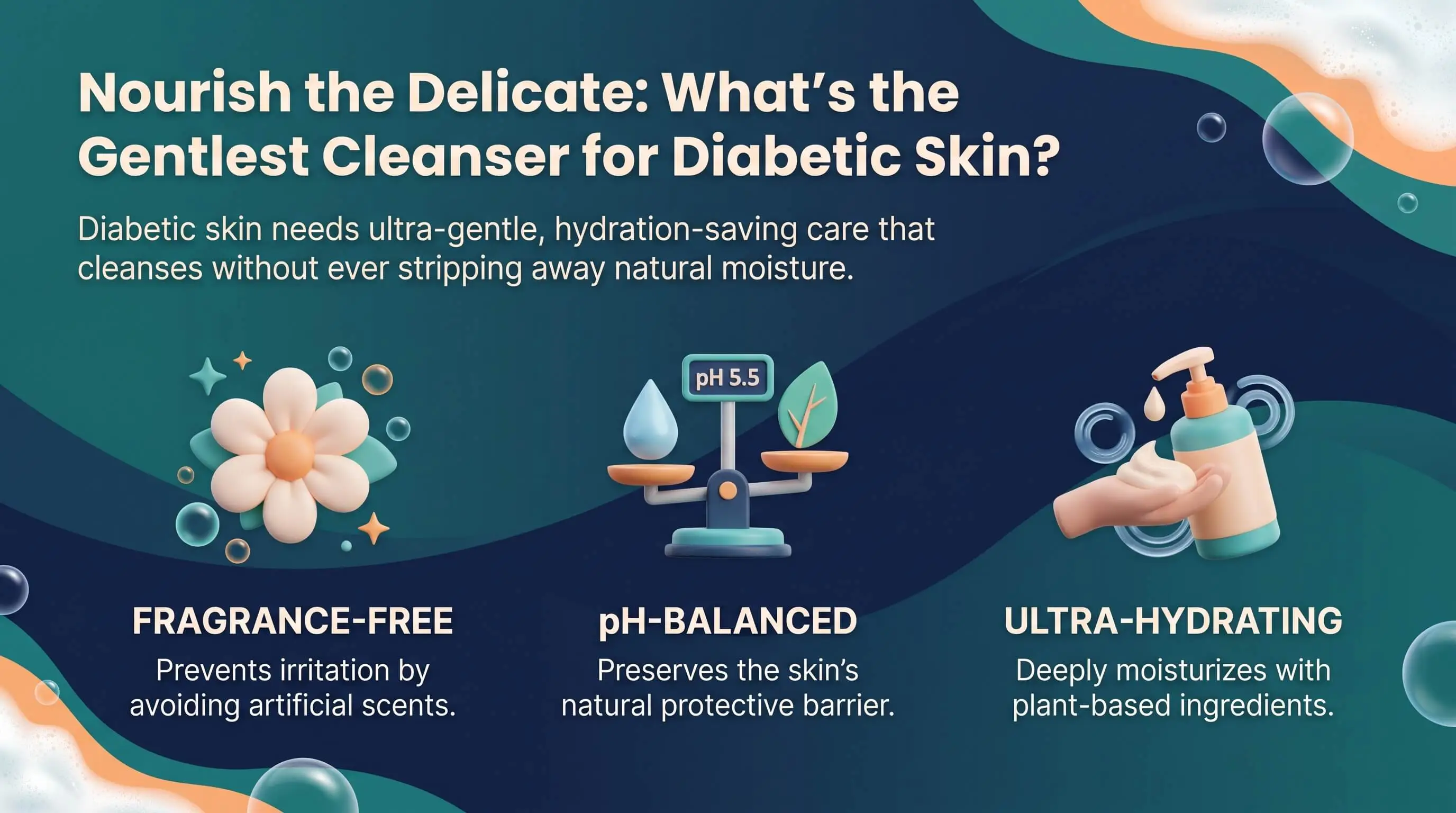
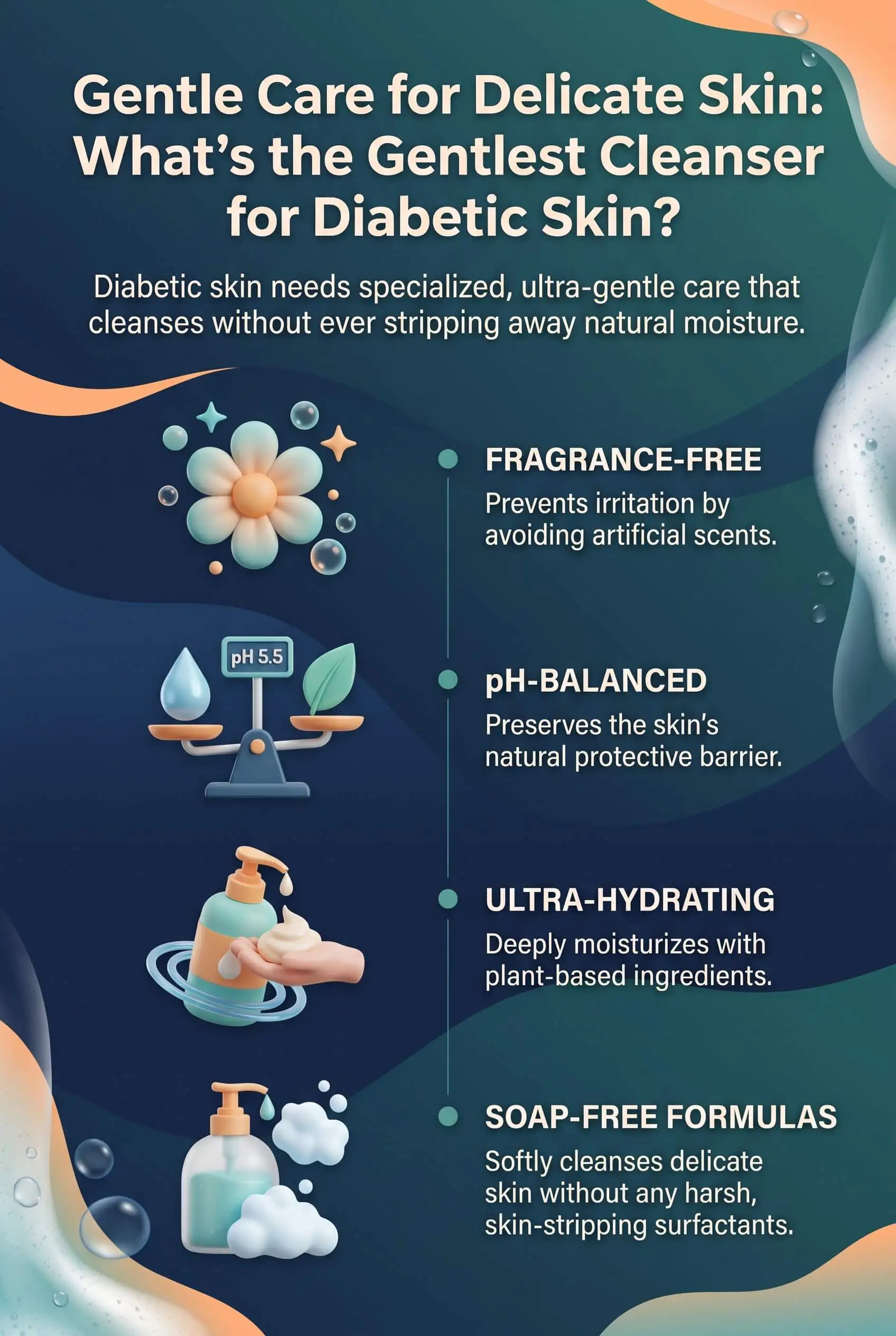
The best soap for diabetics is a fragrance-free, pH-balanced cleanser made without sulfates, alcohol or antibacterial additives. For hands you clean all day, a rinse-free plant-based cleanser is the gentlest pick, because it skips the repeated wetting and drying that strips diabetic skin.
Match your skin's pH. Aim for a cleanser near skin's natural 4.5 to 5.5.
Skip the irritants. Leave fragrance, SLS/SLES, alcohol, triclosan and parabens on the shelf.
Choose the formula over the format. A soap-free bar can be gentler than a harsh liquid.
Cut the rinse cycles. Fewer hot-water washes mean less moisture lost.
Know when to use soap and water. Visibly dirty hands and cuts still call for mild soap and lukewarm water.
Top Takeaways
Diabetes leaves skin prone to drying out and cracking, and every crack raises the odds of infection.
Look for a cleanser that's fragrance-free, sulfate-free, alcohol-free and pH-balanced close to skin's 4.5 to 5.5 range.
Rinse-free plant-based cleansers and soap-free washes rank as the gentlest options, while deodorant and antibacterial soaps sit at the harsh end.
Formula beats format. A soap-free bar can be gentler than a harsh liquid.
Lukewarm water, patting dry, moisturizing right away and checking your feet daily protect your skin as much as the cleanser you choose.
Why Diabetic Skin Needs a Gentler Cleanser
Diabetic skin starts every wash at a disadvantage. High blood sugar pulls water out of the body, and nerve damage can cut down on sweating. Both wear away the oils and moisture your skin uses to protect itself. Doctors call the result xerosis, which simply means abnormally dry skin.
Dry skin cracks. Germs get in through those cracks, and infections are among the skin conditions linked to diabetes. The American Academy of Dermatology warns that deodorant soaps and strong body washes can irritate skin that's already sensitive. It recommends a gentle cleanser or one made for people with diabetes.
Your hands and feet need the most care. You wash your hands more than any other part of your body, and you probably look at your feet the least.
What Makes a Cleanser Gentle?
A gentle cleanser gets your skin clean and leaves its defenses in place. Five things decide whether a formula does that.
Its pH Sits Close to Your Skin's
Healthy skin is slightly acidic, somewhere around pH 4.5 to 5.5. Dermatologists call that thin acidic layer the acid mantle, and it helps your skin hold on to water and push back against bacteria. Most traditional soaps are alkaline. Each wash with one nudges your skin out of its natural range and leaves it to recover on its own.
Its Cleansing Agents Are Mild
Sodium lauryl sulfate and sodium laureth sulfate, better known as SLS and SLES, make a lot of satisfying foam. They also dissolve the fats that hold your skin barrier together. Milder cleansing agents and plant-based ingredients lift dirt away without doing that damage.
It Has No Fragrance
Fragrance adds scent and nothing else to the cleaning, and it ranks among the most common triggers of skin reactions. We cover this in depth in why fragrance-free soap may be better for diabetics.
It Leaves Out Alcohol and Antibacterial Additives
Alcohol dries skin fast. Triclosan and deodorant agents make a formula harsher, and for everyday handwashing they add very little.
It Keeps Water and Friction Low
Hot water and a rough towel can strip oils as thoroughly as a harsh soap. Protecting your skin barrier means taking fewer hot rinses and patting dry, which matters as much as what's in the bottle.
Cleanser Types Ranked From Gentlest to Harshest
The best soap for diabetics usually isn't soap at all, at least in the old-fashioned sense. Here's how the common types stack up.
Rinse-free plant-based cleanser (gentlest). A pH-balanced version stays close to your skin's natural range. Because you skip the repeated wetting and drying, it's the easiest of all on your skin barrier. We like it for frequent hand cleaning, travel, caregiving and anyone with limited mobility. Visibly dirty hands and wounds still call for soap and water.
Syndet (soap-free) wash. Most sit close to neutral or slightly acidic, and they treat the skin barrier kindly. They work well for daily baths and showers, though some versions add fragrance.
Superfatted or moisturizing bar. These are alkaline and moderately drying. If you love a bar, this is the one to pick, but frequent use can still leave skin dry.
Standard bar or liquid soap. Alkaline and hard on the skin barrier, this type is best kept for occasional use. Check for SLS and fragrance, since both show up often here.
Deodorant or antibacterial soap (harshest). It's alkaline, strips the most from your skin, and often carries harsh additives and strong scents. We don't recommend it for diabetic skin.
Whether you pick a bar or a liquid matters less than you'd expect. A soap-free bar can treat your skin more kindly than a sulfate-heavy liquid, so read the ingredient list and the pH claim before you judge by the package.
Where Rinse-Free Cleansers Fit
Each round of washing and drying takes a little moisture with it. A rinse-free cleanser skips the running water entirely, so your skin goes through fewer of those rounds and loses less. That's why we put it at the top of the list for hands that get cleaned all day.
If that describes your hands, a rinse-free option like NOWATA is a strong candidate for the best soap for diabetics. It's fragrance-free and plant-based, made with coconut milk powder, kaolin clay and tapioca starch, and formulated without alcohol, SLS/SLES, parabens or triclosan. New to the idea? Our guide to waterless soap vs. hand sanitizer explains how the two differ.
We'll be honest about the limits. When your hands are visibly dirty, or when you're cleaning a cut, reach for mild soap and lukewarm water.
Ingredients to Look For and Avoid
Look for:
Glycerin
Ceramides
Colloidal oatmeal
Plant starches and clays
A "pH-balanced" or "soap-free" claim
Avoid:
Fragrance or parfum
SLS and SLES
Alcohol
Triclosan
Parabens
Dyes
Want more help reading labels? See how to choose a vegan zero-waste hand soap that doesn't dry your hands out.
A Gentle Daily Cleansing Routine
Wash in warm water, never hot, and skip the long soak.
Save cleanser for the places that need it: hands, feet, underarms and groin.
Pat yourself dry gently, and get between your toes.
Moisturize right away, keeping lotion out from between your toes.
Look over your feet every day for cracks, redness or sores.
"Whenever I compare cleansers, I skip the front of the bottle and flip straight to the ingredient list. The pattern repeats almost every time. The products that leave diabetic hands tight and cracked tend to share a sulfate near the top of the list and added fragrance, and their makers rarely print a pH. In my experience, people who stop stripping their skin twenty times a day see a bigger change than people who buy the most expensive moisturizer on the shelf. A cleanser that respects the acid mantle does more for diabetic skin than any lotion can repair afterward. And if you're washing constantly, cutting out some of those hot-water rinses altogether is one of the quietest, most effective changes you can make."
7 Essential Resources
We lean on these sources most when it comes to diabetic skin care. Medical professionals write or review every one.
American Academy of Dermatology: Dermatologist-recommended skin care for people with diabetes. Dermatologists explain day-to-day care here, including why a gentle cleanser matters and when it's time to see a specialist.
American Diabetes Association: Diabetes and Skin Complications. The ADA walks through the skin conditions tied to diabetes in plain language and adds tips on bathing and moisturizing.
Cleveland Clinic: Diabetes Rash and Other Skin Conditions. Use this one to learn what common diabetic skin problems look like and how to head them off.
CDC: Your Feet and Diabetes. The CDC lays out daily foot care, from washing to drying to moisturizing safely.
NIDDK: Diabetes and Foot Problems. This government guide covers water temperature, drying between your toes, and catching trouble early.
Journal of Drugs in Dermatology: Diabetic Skin Changes Can Benefit from Moisturizer and Cleanser Use. A 2019 clinical review looks at how gentle cleansers and moisturizers help dry diabetic skin.
Alberta MyHealth: Caring for Your Skin When You Have Diabetes. Short, practical advice on choosing a soap, including why to pass on deodorant and antibacterial bars.
3 Statistics
40.1 million Americans have diabetes. The CDC's 2023 estimate puts that at 12.0% of the US population, diagnosed or not. Roughly 11.0 million adults have it and don't know. (CDC National Diabetes Statistics Report)
About 1 in 3 people with diabetes will develop a skin problem. Cleveland Clinic says this applies to type 1 and type 2 alike, and it can show up at any point. (Cleveland Clinic)
Dermatologists found xerosis in 81.3% of the type 2 diabetes patients they scored. That's 244 of 300 patients in an Italian multicenter study. (Acta Dermato-Venereologica, 2021)
With millions of Americans living with diabetes and skin dryness affecting many patients, choosing a gentle cleanser is an important part of daily skincare. Understanding how solvents and solvency affect a soap's ability to dissolve oils and remove dirt can help explain why mild, moisturizing formulas are preferable for diabetic skin, especially in dry, air-conditioned environments.
Final Thoughts and Opinion
We read through the dermatology guidance and compared a stack of labels, and we kept landing in the same place. The gentlest cleanser for diabetic skin is the one that takes the least away. In practice, that means a pH close to your skin's own and a formula free of fragrance, sulfates and alcohol. For hands that get cleaned all day, it also means fewer hot-water rinses.
Our pick for everyday hand cleaning is a rinse-free plant-based cleanser, paired with a soap-free wash in the shower. Between them, those two cover most of what diabetic skin asks for. Other answers can work too. A fragrance-free, ceramide-rich diabetic body wash is a solid choice, and some people do just fine with a well-made moisturizing bar.
The one thing we'd steer anyone away from is the deodorant bar or antibacterial soap that came with the house. Your skin has put up with enough. Give it a cleanser that works on its side.
This article is for general information and isn't medical advice. If you notice skin changes, or cuts and wounds that are slow to heal, talk with your doctor or a dermatologist.
Frequently Asked Questions
What is the best soap for diabetics?
The best soap for diabetics is a gentle, fragrance-free cleanser with a pH near skin's natural 4.5 to 5.5 range, made without sulfates, alcohol or antibacterial additives. Rinse-free plant-based cleansers and soap-free washes tend to be the gentlest choices. That's especially true if you wash your hands often.
Is bar soap or liquid soap better for diabetic skin?
The format alone won't tell you. What matters is the formula, and a soap-free or moisturizing bar can be gentler than a liquid loaded with sulfates and fragrance. Scan the ingredient list for harsh cleansing agents and added scent, and look for a pH-balanced claim.
What pH should a cleanser be for diabetic skin?
Choose a cleanser that's pH-balanced to your skin. Healthy skin naturally sits around 4.5 to 5.5, and that slightly acidic layer, the acid mantle, helps hold moisture in and keep bacteria out. Traditional alkaline soaps pull your skin away from that range every time you wash.
Are antibacterial soaps good for people with diabetes?
For everyday use, usually not. Alberta MyHealth and the American Academy of Dermatology both advise people with diabetes to avoid deodorant and antibacterial soaps, because those soaps can dry out and irritate sensitive skin. A gentle cleanser removes germs and leaves the harsh additives behind.
Can people with diabetes use rinse-free or waterless cleansers?
Yes. A rinse-free cleanser can be a gentle choice because it cuts down on the repeated wetting and drying that strips skin. Travelers, caregivers and people with limited mobility often find it especially handy. For visibly dirty hands or wound cleaning, use mild soap and lukewarm water.
How should diabetics wash their feet?
Wash your feet every day in warm water, never hot, and don't let them soak. Dry them gently and thoroughly, paying extra attention to the spaces between your toes. Moisturize the tops and soles but not between the toes. Then check your feet daily for cuts, cracks or redness.
Choose a Cleanser Your Skin Can Live With
Pick up the soap by your sink and turn it over. If fragrance, SLS or alcohol shows up on that label, your skin deserves better. Swap it for a fragrance-free, pH-balanced cleanser, follow the routine above, and give your hands two weeks to show you the difference. When you're ready to read labels like a pro, start with our guide to why fragrance-free soap may be better for diabetics.