Parents ask some version of this every day. The answer comes down to one idea that gets lost in most hand hygiene advice. In the waterless soap vs hand sanitizer debate, soap removes germs. Sanitizer kills some of them and leaves the rest of the mess right where it was.
To get clear, practical answers, we looked to Dr. Ruslan Maidans and Dr. Yalda Shahriari, co-founders of NOWATA™. One is a dentist and the other a biomedical engineer, and both are parents of young children. They spent two years developing a plant-based, rinse-free hypoallergenic hand soap after facing the same diaper-bag dilemma you are. Below are their answers to the questions parents ask most, checked against guidance from the CDC, FDA and the American Academy of Pediatrics.
TL;DR Quick Answers
Waterless soap vs hand sanitizer
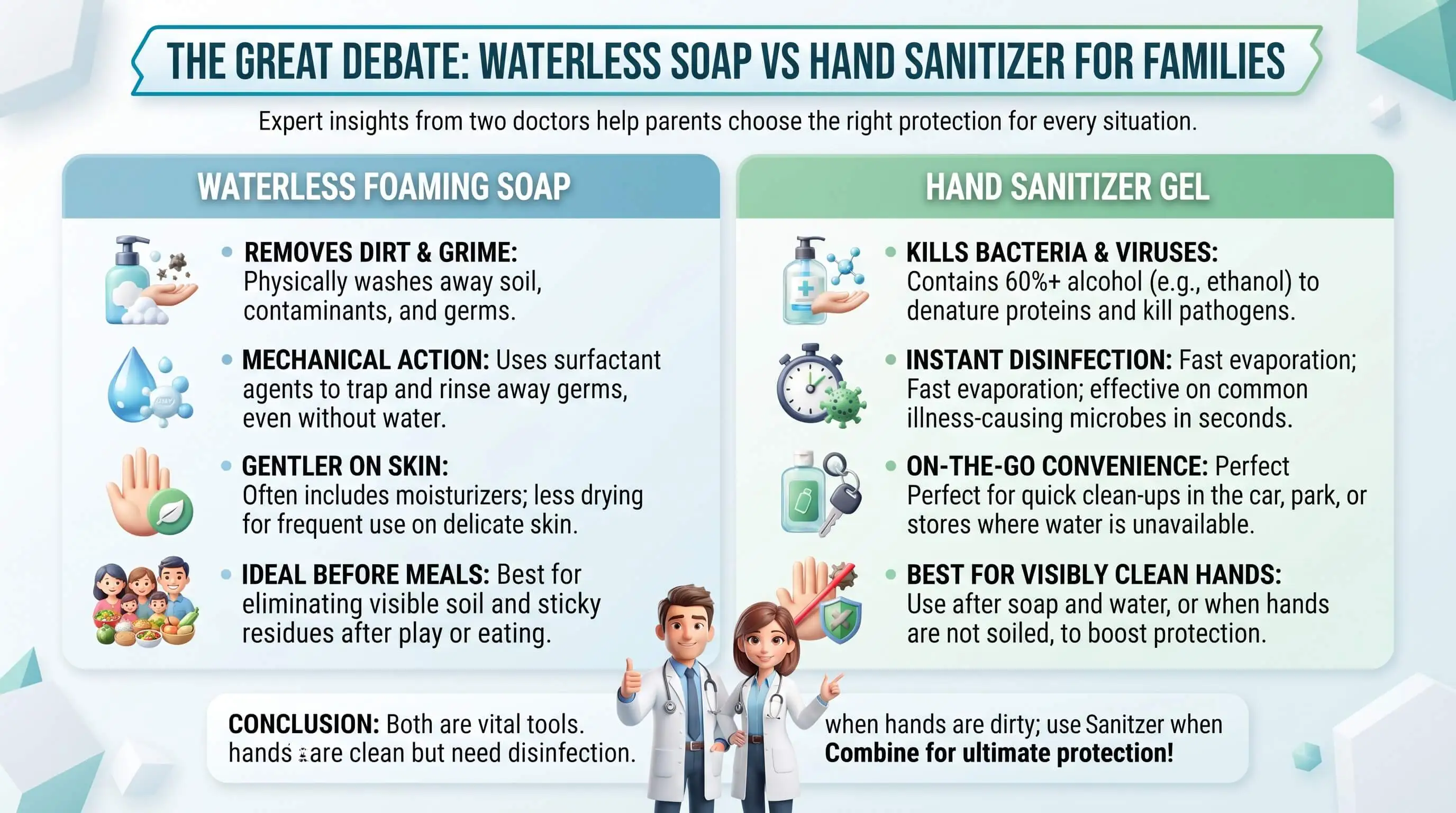
Waterless soap physically removes germs, dirt and oil from the skin. Hand sanitizer uses alcohol to deactivate some germs and leaves everything else behind.
How it works: rinse-free soap binds to germs and grime so you can brush them away, while sanitizer deactivates some germs where they sit.
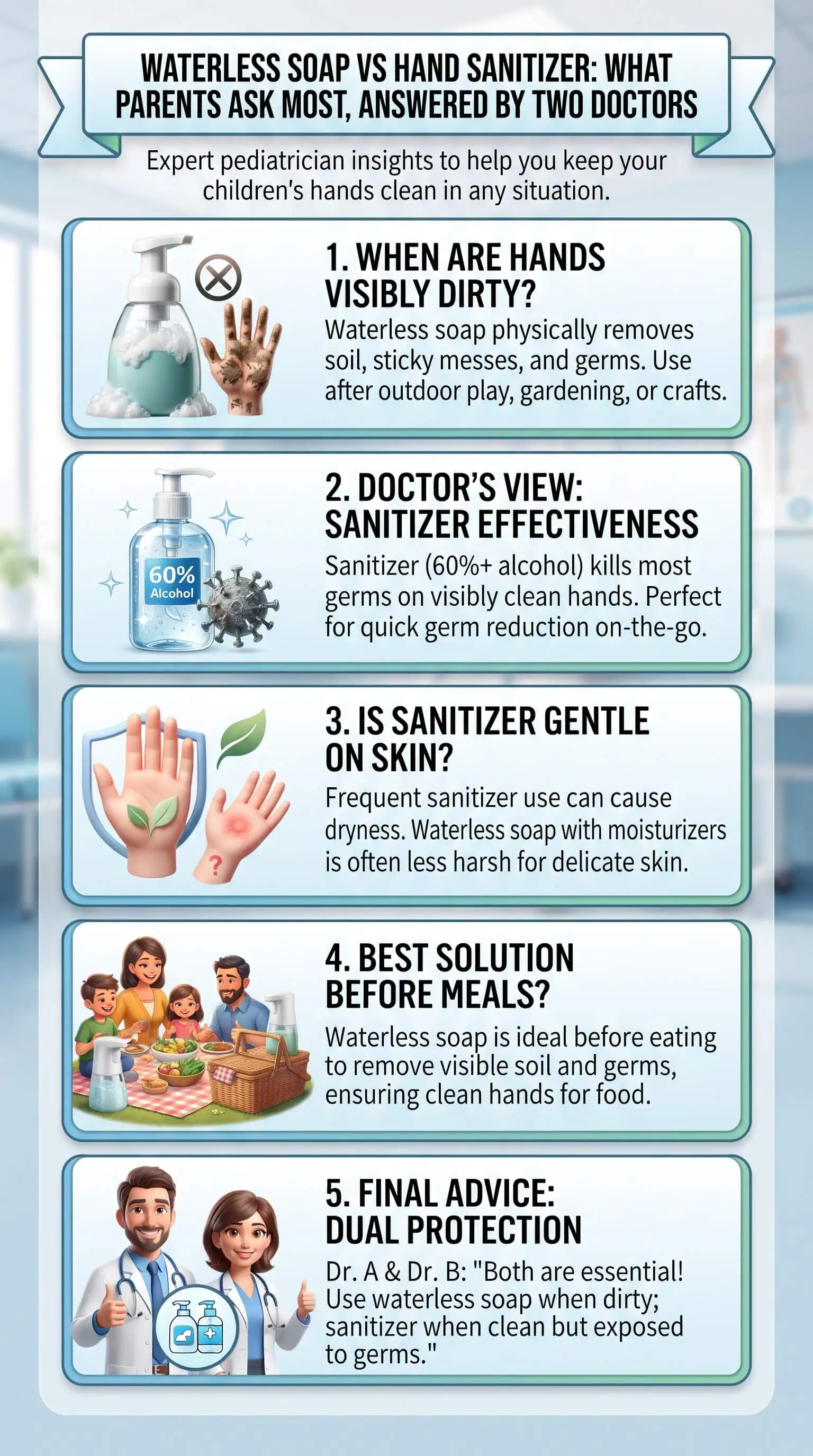
Dirty hands: waterless soap lifts grime off the skin. The CDC doesn't recommend sanitizer on visibly dirty or greasy hands.
Germ removal: in a Swiss lab test (modified ASTM E1174), NOWATA™ physically removed more than 99.9% of murine norovirus and E. coli particles.*
Kids: alcohol-free soap takes alcohol out of the picture. Sanitizer needs adult supervision for children under 6.
When to use which: soap and water first, waterless soap between sinks, and sanitizer as a backup for clean-looking hands.
Top Takeaways
Soap removes germs, dirt and oil. Sanitizer deactivates some germs and leaves everything else behind.
Soap and water remain the first choice, especially after the bathroom, before eating and during stomach bugs.
Sanitizer isn't recommended on visibly dirty or greasy hands, which describes most kids' hands after play.
Supervise children under 6 with sanitizer and store every bottle out of reach, including travel sizes.
Rinse-free soap gives you removal-based cleaning when there's no sink, with no water or alcohol needed.
What Is the Real Difference Between Waterless Soap and Hand Sanitizer?
Hand sanitizer uses alcohol, ideally at least 60%, to deactivate certain germs on the skin. It doesn't lift dirt, food or oil, and anything it doesn't deactivate stays on your child's hands. Waterless soap, also called rinse-free soap, works the way regular soap does, just without the sink. It binds to dirt, oil and germs so they can be brushed or wiped away.
That's the whole story in one line. Sanitizer treats harmful pathogens where they sit. Soap takes them off.
Which One Removes More Germs?
The CDC says soap and water work better than sanitizer against certain germs, including norovirus, Cryptosporidium and C. difficile. That advantage comes from removal. Rinse-free soap is designed to deliver the same kind of removal when there's no sink nearby.
In an independent Swiss lab test using a modified ASTM E1174 method, NOWATA™'s plant-based formula physically removed more than 99.9% of murine norovirus and E. coli particles from hands.* For the full method and results, see the founders' detailed breakdown of waterless soap vs hand sanitizer.
*Lab result for hand cleansing only. It does not imply disease prevention.
Is Hand Sanitizer Safe for Toddlers?
Yes, with an adult in charge. The CDC advises supervising children under 6 when they use sanitizer so they don't swallow it or get it in their eyes. Brightly colored, scented bottles tempt little hands most. Keep sanitizer up and away, and don't forget the travel bottles in the car, backpack and diaper bag.
An alcohol-free, rinse-free soap takes alcohol out of the picture, making it a hand sanitizer alternative. Like any hygiene product, it still belongs out of reach and should be used with supervision.
What Should I Use on Sticky, Dirty Hands After the Playground?
This is where sanitizer falls short. The CDC says not to rely on it when hands are visibly dirty or greasy, such as after playing outdoors, gardening or camping. Wash with soap and water when you can. When you can't, a rinse-free soap that lifts grime off the skin is the better stand-in.
When Should Your Family Still Head to the Sink?
Rinse-free soap fills the gaps between sinks. It doesn't replace them. Use soap and running water:
After using the bathroom or changing a diaper
Before eating and while preparing food
When someone at home has a stomach bug
When hands are caked in mud, grease or paint
Waterless Soap vs Hand Sanitizer: Side by Side for Parents
Hand sanitizer
How it works: alcohol deactivates some germs
Visibly dirty hands: not recommended
What stays behind: product and deactivated germs dry on the skin
Alcohol: at least 60% recommended
Kids under 6: adult supervision needed
Best moment to use: clean-looking hands, no sink
How it works: binds to and removes germs, dirt and oil
Visibly dirty hands: lifts grime off the skin
What stays behind: germs and grime are brushed away with the soap
Alcohol: alcohol-free options available
Kids under 6: supervise and store out of reach
Best moment to use: sticky or messy hands, no sink
What the Doctors Say: Lessons From Two Parents Who Built a Better Option
For Dr. Maidans and Dr. Shahriari, this question started at home, not in a lab. As parents, they reached for sanitizer after every playground trip and snack break. Each time they ran into the same problem: it didn't take anything off their kids' hands. The stickiness, the dirt and the germs sitting in it were all still there.
So they set out to build a soap that removes instead of kills, and that works with no water at all. Two years of formulation later, they tested it where it mattered most, on their own children's hands after soccer practice, park visits and messy meals. Only then did they trust it for other families.
"As parents, we kept reaching for sanitizer after the playground and watching our kids' hands stay just as sticky, with the germs still sitting in the grime. That's what sent us into the lab for two years to build a soap that removes germs instead of just deactivating them. We tested every version on our own children's hands before we'd offer it to another family. Our advice is simple. Use the sink when you have one, and when you don't, choose the option that takes the mess off rather than leaving it behind."
7 Essential Resources for Parents
CDC: Hand Sanitizer Guidelines and Recommendations explains when sanitizer works, when it doesn't, and why 60% alcohol is the minimum.
CDC: Hand Sanitizer Facts covers the science behind sanitizer use and its limits against certain germs.
CDC: Hand Hygiene in Schools and Early Care Settings shows how schools and daycares should handle sanitizer with young children.
FDA: Safely Using Hand Sanitizer offers safety tips for families, including supervision and storage.
HealthyChildren.org (AAP): Hand Sanitizers: Keep Children Safe from Poisoning Risk gives pediatrician guidance on storing and supervising sanitizer at home.
HealthyChildren.org (AAP): Hand Washing: A Powerful Antidote to Illness explains why soap and water win when kids' hands are visibly dirty.
Minnesota Department of Health: How It Works: Cleaning Hands with Hand Sanitizer walks through proper technique and why dirt must come off first.
3 Statistics Every Parent Should Know
Nearly 85,000 calls. From 2011 through 2015, U.S. poison control centers received nearly 85,000 calls about hand sanitizer exposures in children. (CDC)
Up to 40% fewer diarrhea cases. Handwashing education in the community reduces the number of people who get sick with diarrhea by 23% to 40%. Handwashing with soap could protect about 1 in 3 young children who get sick with diarrhea. (CDC)
A 64% jump in calls. In March and April 2020, the Texas Poison Center Network saw a 64% increase in calls about accidental hand sanitizer ingestion compared with the year before. 69% of those calls involved children under 5. (Texas DSHS)
Just as an understanding of the concept of venting out helps parents maintain a healthier indoor environment, understanding the risks of sanitizer exposure and the benefits of handwashing helps them make informed hand hygiene choices for their children.
Final Thoughts and Opinion
Hand sanitizer isn't the villain here. It has a job, and it does that job well on clean-looking hands when no sink is around. The trouble is that it's become the default for every situation, including the ones it was never built for. Kids' hands are rarely just a little germy. They're sticky, muddy and covered in last night's crayon.
Our view is simple. Soap and water stay first. For everything between sinks, choose the option that removes what's on your child's hands rather than leaving it there. A rinse-free soap does that without water, alcohol or wipes, which makes it a smarter everyday pick for the diaper bag. Keep sanitizer as a backup, store it well, and stay with your little ones when they use it.
Clean hands should be simple. The right tool for the moment makes them that way.
Frequently Asked Questions
Is waterless soap the same thing as hand sanitizer?
No. Hand sanitizer uses alcohol to deactivate some germs on the skin and doesn't remove dirt or oil. Waterless soap cleans like regular soap without rinsing. It binds to germs, dirt and oil so they can be brushed or wiped away. One treats germs in place; the other takes them off.
Can I use hand sanitizer on my toddler?
Yes, when soap and water aren't available and an adult supervises. The CDC recommends supervising children under 6 to prevent swallowing or eye contact. Use a small amount, rub until dry, and store the bottle out of reach, including travel sizes in bags and cars.
Does hand sanitizer work against stomach bugs?
Not as well as soap. The CDC says soap and water are more effective than sanitizer at removing norovirus, a common cause of stomach bugs. When someone at home is sick, wash with soap and running water whenever you can.
What if my child licks their hands after using sanitizer?
The FDA says there's no need for concern if children eat with or lick their hands after using sanitizer once it has dried. The real risk is swallowing it from the bottle, which is why supervision and safe storage matter.
Can waterless soap replace handwashing at home?
No. Waterless soap fills the gaps between sinks: the car, the park, the sports sideline. At home, soap and running water are still the standard after the bathroom, before meals and during food prep.
Which should I keep in the diaper bag?
A rinse-free soap handles sticky, dirty hands when no sink is around, which covers most on-the-go messes. Sanitizer can stay as a backup for clean-looking hands, stored where small hands can't reach it.
Make On-the-Go Cleanup Simpler
The next sticky-hands moment is never far away. Before it arrives, take two minutes to read the doctors' full lab-test breakdown linked above. Then check your diaper bag, glove box and backpack: swap at least one sanitizer bottle for a rinse-free waterless hand soap, and move the rest up high where little hands can't reach. Clean hands, no sink, no stress.